

Scottish Clans
Morrison Tartans & Clan
The name Morrison developed in three different parts of Scotland simultaneously, Aberdeenshire, Harris and Lewis. Finally, In 1965 the three separate Morrison families were recognised as a single clan.
Who Wears Morrison Tartan? - Associated Names
First of all to explain why there are so many tartans, way over 2000 in fact. There are an awful lot of Scottish clans to start with and on top of this each clan can have many different tartans and names associated with it.
- Brieve
- Elmore
- Gilmore
- Gilmour
- Judge
- MacBrieve
- Mac Ghille Mhoire
- MacIlmorrow
- McLemore
- McElmurry
- Mylvorrey
- Marrison
- Morison
- Morris
- Morrisson
- Murison
Morrison Tartans
7 variationsEach tartan can have multiple variations, the most common of which are Ancient, Modern, Weathered, Hunting and Dress


About tartan variations
- Ancient
- Modern
- Weathered
- Hunting
- One thing to remember if you are ordering your tartan to match an existing kilt or accessory is that although the sett and colours are the same, there can be a slight difference in colour from one mill to the next. This is purely down to yarn dying so if
Ancient Tartan
Before 1860 fabrics were coloured using animal and vegetable dyes. This produced the softer colours typical of the Ancient tartans, mossy greens and sky blues, a more orangey red and some would say showing off the pattern to much greater effect as as the contrasts are much brighter than the Modern tartans. The pattern or sett remains the same across all variations of a single tartan, and only the shades or tones vary.
Helpful Advice
Post 1860 chemical dyes replaced the natural animal and vegetable dyes and the Modern Tartans were born with their stronger and bolder colours. The soft greens and blues become bottle green and navy blue, reds are scarlet.
Modern Tartan
Before 1860 fabrics were coloured using animal and vegetable dyes. This produced the softer colours typical of the Ancient tartans. Post 1860 chemical dyes replaced the natural animal and vegetable dyes and the Modern Tartans were born with their stronger and bolder colours. The soft greens and blues become bottle green and navy blue, reds are scarlet.
Helpful Advice
The Modern tartans are often the more subtle combinations such as the classic Black Watch Modern
Weathered Tartan
Before 1860 fabrics were coloured using animal and vegetable dyes. This produced the softer, more earthy colours typical of the Weathered tartans, reminiscent of bolder colours subjected to wind, rain and sunshine producing beautiful faded tones, olive greens and browns, and very light blues with reds that are more pink than red.
Helpful Advice
Some mills refer to the Weathered tartans as Muted.
Hunting Tartan
The Hunting Tartans are the camouflage tartans and some clans don't have these variations because they are already predominantly green or brown and don't need amendment to blend in with nature's colours. The Black Watch or Gunn tartans are examples of these, whereas a tartan such as the Fraser is predominantly red and would not provide much cover for men out hunting.
Helpful Advice
One thing to remember if you are ordering your tartan to match an existing kilt or accessory is that although the sett and colours are the same, there can be a slight difference in colour from one mill to the next. This is purely down to yarn dying so if you need an exact match we suggest you order a swatch to double check.
One thing to remember if you are ordering your tartan to match an existing kilt or accessory is that although the sett and colours are the same, there can be a slight difference in colour from one mill to the next. This is purely down to yarn dying so if Tartan
The Dress Tartans were designed as the name suggests for celebrations and highland dance. The sett or pattern of the tartan remains the same and the main colour is changed to white, or extra white is added to the pattern to give it a brighter, more "fancy" appearance. The Scots do like to bend the rules and occasionally instead of white thread, yellow is used and this is where the rather wild MacLeod Dress Modern and Barclay Dress Modern came from.
Helpful Advice
One thing to remember if you are ordering your tartan to match an existing kilt or accessory is that although the sett and colours are the same, there can be a slight difference in colour from one mill to the next. This is purely down to yarn dying so if you need an exact match we suggest you order a swatch to double check.

From the start
Morrison Clan Origins & History

Explore the history
How it all started
Territories
It is likely that there are three territorial origins of Clan Morrison: two in the Hebrides, and one on the mainland.
One branch, the O'Muirgheasains, had noble beginnings in County Donegal, living as bards and keepers of the holy relics of St Columbcille at Clonmany. It is thought that one adventurous sect of this family left their homeland to travel, and settled in Habost, on the north-east coast of Lewis.
Further to the south, another Morrison stronghold was born when the infant Gillemorrie, or 'servant of the Virgin Mary', washed ashore with his parents, King Olav and his wife Lauon. The family had survived a storm at sea by clinging to a piece of driftwood. When the child grew up, it is believed that he married the heiress of Clan Igaa, who owned Pabbay Castle near Harris. Their descendants were thereafter known as 'Mhic 'ille Mhuire.
Meanwhile, a completely separate group of Morrisons were gaining territory, renown, and influence in Aberdeenshire, seemingly with no obvious connection to their Hebridean counterparts. Instead, they descended from Maurice, a Norman name derived from the Latin 'Mauricius,' meaning 'dark-skinned.'
Clan Chief
The current clan chief is R. Alasdair Morrison, who inherited the position on 7 November 2020 at just 17 years old.
He was born in New Hampshire, USA, but has dual citizenship in the US and the UK. He has a strong connection to Scotland, having spent his childhood summers at his family home, Ruchdi, in the Outer Hebrides, where he enjoyed hiking across the breathtaking landscape.
He also plays the Celtic and bluegrass fiddle and even performed at the 2021 Grandfather Mountain Highland Games, where he was the youngest ever Chief to open the ceremony.
Where does the name Morrison come from?
As the Clan have several different origin stories, there are also a number of differing name origins. It is thought that many Scots with the name Morrison are 'sons of Maurice.' Maurice was a name that the Normans brought to Scotland around 200 years before surnames became commonly used. It was most likely spelled 'Morice' and pronounced as 'Morris.' It would then have evolved to Morrison over time.
Another popular theory suggests that Morrison came from the name Gille Mhoire which means 'servant of the Virgin Mary.' It was common practice among early Gaelic-speaking Christians in Scotland to name their children after a saint. When surnames came to be adopted, any child of a man with this name would have been christened 'Mac Ghille Mhoire,' which was gradually anglicised to Morrison.
Meanwhile, the progenitors of one branch of Clan Morrison, the O'Muirgheasains, boasted a simple yet envious origin story, with their name meaning 'sea valour,' commemorating their brave and adventurous nature.

Bognie Castle
Bognie Castle (also referred to as Conzie Castle) is located just outside of Huntly in Aberdeenshire and is the historic seat of Clan Morrison. Clan Morrison accquired the lands in the 17th Century and built the castle shortly after, so as to mark the territory as their own. The Castle now lies in ruins.Do Clan Morrison have a Society?
The Clan Morrison Society of North America welcomes members with the name Morrison, Gilmore, or Brieve, and works to promote an understanding of the clan and its history, as well as encouraging the development of traditional Celtic skills.
They pursue this goal in several admirable ways, including collecting and preserving books and documents about Clan Morrison, promoting regular communication between members, the executive committee, and the chief, sponsoring the scholarship of Scots Gaelic, Highland dance, and traditional Celtic music, and funding archaeological investigations.
If you would like to contribute to this great work, as well as connect with your clan peers, please think about joining! You can find out more on their website here.

Do Clan Morrison have a Plant Badge?
Clan Morrison's plant badge is driftwood, a unique choice with a charming backstory!
It is said to commemorate the progenitors of the Harris branch of the family, who supposedly washed up ashore having survived a storm at sea by clinging onto a piece of driftwood. Naturally shaped and weathered by the ocean, driftwood reflects the clan's connection to a number of rugged Scottish islands, and represents their resilience, strength and adaptability.

Do Clan Morrison have a Crest?
Clan Morrison's crest is particularly ornate and detailed. It is described as 'Issuant from waves of the sea Azure crested Argent, a mount Vert, thereon a battlemented wall Azure masoned Argent, and issuing therefrom a cubit arm naked Proper, the hand grasping a dagger hilted Or'.
This means that it shows the tower of a castle rising from choppy sea waves. There is a hand clutching a dagger emerging from the top of the tower, creating a striking and menacing image.
The sea evokes the family's long history with several wild Scottish islands, while the dagger and tensed hand reflect the clan's strength, bravery, and drive to protect their land.

Are Clan Morrison connected to an Island?
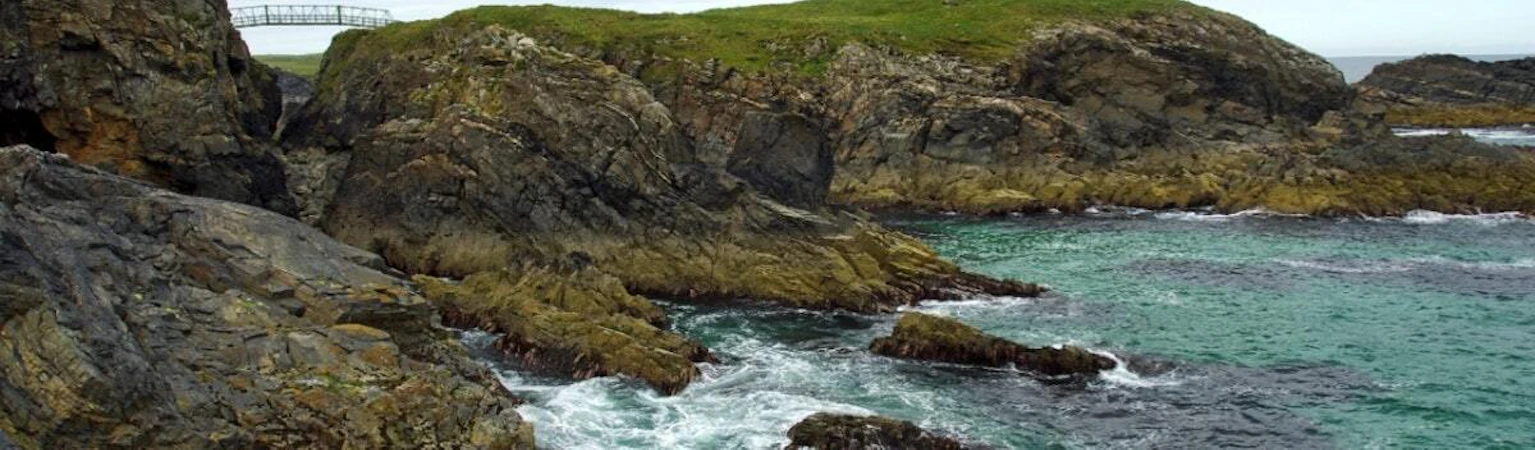
Pabbay, an island within the Sound of Harris, holds a significant place in the history of Clan Morrison. Now uninhabited, it was once the seat of the Morrisons of Harris, and it's from this branch of the Morrisons the current Clan Chief descends.
The name originates from 'papey,' Norse for 'island of the papar,' or 'monks,' though the residents of the island were actually better known for distilling illicit whisky!
Initially, the Estate owners did not object to this, as it meant the islanders could afford their rent, but excise men were not so willing to turn a blind eye. The community managed to avoid getting caught for years, as local ferrymen would hoist a warning signal on their masts when the officers were onboard, giving the whisky distillers time to hide any evidence. Eventually their luck ran out and much of the population was evicted as punishment, with only one shepherd's family remaining on the island by 1846.
Ben a Charnain, Pabbay's summit, has beautiful views of the Sound of Harris, the West Coast's golden beaches and the Atlantic Ocean. The village is deserted but sheep and wild deer still occupy the island.
Image credit: Jkirriemuir
Do Clan Morrison have a War Cry?
Clan Morrison has two war cries: 'Teaghlach Phabaigh,' meaning 'the Family of Pabbay,' and 'Dun Eistein,' or 'Hugh's Fort.' These relate to the clan's ancestral home on the Isle of Pabbay, a small island in the Outer Hebrides, and their ancient stronghold in Ness, North Lewis.
By evoking images of their homelands, these cries would have served to unite the family in battle, reminding them of their shared history and kinship. We're sure this would have made them a fearsome sight for any unlucky enemy!

Clan Battles
Clan Morrison often tried to live in relative peace with their neighbours, but they were never scared to defend themselves when necessary. One such occasion occurred when the MacAuleys of Uig killed Donald Ban, the brother of John Morrison the Brehon at Habost. The Morrisons were enraged and retaliated by raiding Uig. Unfortunately, the MacAuleys were able to ask their allies, the MacLeods of The Lewes, for support, leaving the Morrisons vastly outnumbered. The MacAuleys and MacLeods invaded Clan Morrison's territory and captured their Chief, imprisoning him at Rodil.
The wily Chief managed to escape, but the MacLeods had used their influence with the King to have him officially declared an outlaw, leaving him in an impossible situation.
Morrison was left to use his smarts to save himself and came up with a plan to be able to return to his family. The Chief acted by kidnapping one of the MacLeod heiresses, promising that he would release her unharmed in exchange for freedom and royal pardon.
The king obliged, the girl was released, and Morrison was allowed to go back to his clan a free man again.
Image credit: Elizabeth Veitch, CC BY-SA 2.0
Durness
Popular tradition says that in the 1600s, around 60 Morrison families moved to Durness after Ay Mac Hormaid married a daughter of the Bishop of Caithness, who gifted the couple ownership of the whole parish.

Do Clan Morrison have a Tartan?
Clan Morrison have two recognised tartans: one red and one green. The green tartan evolved from a Mackay design, commemorating the ties between the two families, as Ay Mac Hormaid, a Morrison, married the daughter of the Bishop of Caithness, a Mackay.
The red tartan has a mysterious origin story. It is said that in the 1930s, workers tasked with demolishing a house on the Isle of Lewis discovered an old bible wrapped in bright red tartan. A note enclosed in the book dated to 1745 claimed that the tartan belonged to Clan Morrison. The Lord Lyon officially declared it to be a Morrison tartan on 3 January 1968, and it was first worn again at the 1964 Clan Gathering.
We have Ancient, Modern and Weathered variations of the Morrison tartans, as well as an Old and Rare Morrison Red Muted tartan.
A Family Scandal
In the 16th century, Clan Morrison were involved in a shocking scandal when Hutcheon Morrison confessed to being the biological father of Torquil MacLeod, who had been believed to be the son of the MacLeod chief.
Consequently, Torquil was disinherited and the role of chief passed to another line of the family. Torquil then made an alliance with Clan Morrison and Clan Mackenzie to seek revenge for his disinheritance.
However, after a time, Torquil declared himself to still be a MacLeod at heart, and turned on the Morrisons and Mackenzies, forcing them from their lands and looting their possessions.

Clan Morrison
Tartan Poll
There are seven Clan Morrison tartans to choose from - vote in our poll to let us know your favourite(s)!
The Morrisons of Lewis
In 1965, the Lord Lyon declared that there was then no direct traceable descendant of the chiefs of the Morrisons of Lewis. He therefore recognised Dr. John Morrison of Ruchdi as the 'principal chief of the whole name and clan of Morrison.'
TOP 5 FACTS
Clan Morrison
Learn about their origins, Clan Chief, plant badge and more.

Clan Morrison
Famous Faces
Clan Morrison is renowned for their intelligence, determination, and resilience. These admirable traits have helped them reach the very top of numerous fields, achieving great things in the worlds of music, literature, politics, and more. Read the blog to find out more!
Image credit: Elektra Records

The Castles of Clan Morrison
Clan Morrison are deeply proud of their territory and have claimed vast swathes of land over the centuries. We think that learning about the family’s stunning homelands and grand houses is the perfect way to get to know them better and deepen your connection with your heritage.
Image credit: James Allan
ScotlandShop On The Sofa
The Story of Clan Morrison
This month we are delving into all things Clan Morrison!
Join John and Carrie as they explore the clan’s origins, their notable historic sites, and one particular Morrison who rocked the world.

Clan Morrison
Quiz
How much do you think you know about Clan Morrison? Enough to get all 12 questions correct? Test your Morrison Clan Knowledge now!
Clan Motto: Teaghlach Phabaigh (Pabbay Family)


